





Shaman
by Melissa Embry
Black Omar looked up as he entered the marketplace of al-Shara, squinting against the late winter sky at the inscription overhead. The town clinging to the banks of the great river was little more than a village, but the pillars surrounding its marketplace supported a roof – only slightly dilapidated – that formed a sheltered arcade, a comfortable place to exchange gossip and merchandise, human or otherwise.
The carved inscription, Omar had heard, honored the caliph who had the arcade built when Syria was a land of importance, before successor caliphs pulled back to Baghdad. But wind and sand, summer sun and winter rain, and the stones flung by generations of small boys had nearly effaced the inscription.
A shimmer obscured Omar’s sight, the aura that presaged true seeing. He shrugged off his uneasiness. And in any case, he could not have read the inscription. He was a slave.
A child’s scream resounded within the marketplace, followed by the thudding footfalls of men running in the warren of alleys. Omar leaned against a pillar, out of the path of any fleeing thief.
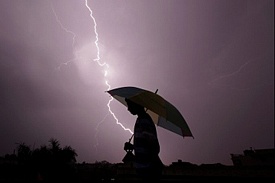
A man – not young, but not as old as Omar -- raced past. He held a scarecrow of a small girl against his shoulder. The lightning streak of a scar ran down one cheek and into his beard, the scar that had given the man his nickname – the Frank, al-Mastoub – the slashed one. Two pursuers panted at his back – the guards of the slave dealer al-Darda, their weapons drawn.
A crowd of the small boys and dogs appeared, in the manner of crowds. They encircled the fighters, shouting and barking. Omar stepped out of the pillar’s shadow and drew his scimitar, whirling it as he advanced. At the sound of steel slicing the air, al-Mastoub glanced over his shoulder for a startled instant.
The wounded attacker fled, unmindful of the shower of flung jeers and pebbles from the onlookers. But the second grabbed the girl’s bare foot, sneering to see his prey trapped. The Frank tried futilely to pull the child free as the attacker held his blade’s edge, not against the Frank, but across the child’s ankle. She screamed again in incoherent terror.
The Frank dropped his weapon as the guard yanked the child from her protector’s grasp and sheathed his blade.
“Let her go,” Omar said from behind the guard’s back, unnoticed during the struggle. The tip of his scimitar stroked the man’s spine.
Al-Darda’s man dropped his hand to his weapon again. Omar reversed his scimitar and struck with the hilt at the man’s wrist, snapping the bone. With a yelled curse, the man dropped the girl and followed his comrade in flight.
Omar leaned on his weapon, panting, until the sick dizziness that plagued him nowadays after exertion subsided, watching as the crowd dispersed. Al-Mastoub picked the child up again before looking to Omar.
“Thank you,” he said.
Omar looked the child over. Skin and bones. Tears cut runnels down her filthy face. But it was her eyes – translucent as water – that most troubled him. The first time Omar had seen such eyes, he thought the woman in whose face they were set was blind. Even al-Mastoub’s were not so pale.
“She reminded me of Sibylla.” There was a trace of wistfulness in the Frank’s voice.
#
Far to the west, beyond the two rivers, a woman leaned from a window in the highest tower of the prince’s palace in Antioch -- Sibylla, the prince’s concubine. She observed the aspect of the heavens, sniffing the salt smell of the sea, then clanged the shutters closed over the windows. Across them, her serving women drew curtains of heavy silk whose color changed from green to blue and back again as they rippled in the drafts. Panels of the same silk enclosed the room.
The draperies hushed the moaning of wind from the sea at the center of the world, the sea whose traffic had made the Frankish princedom of Antioch rich. A heavy gloom fell over the chamber. So silently did the servants move, lighting honey-scented wax tapers, that the fall of a tinderbox onto the carpeted floor thudded like the tread of armed men.
At a command from Sibylla, the women withdrew.
She listened as their whispers and shuffling steps faded, and rose from her high-backed chair, locking the chamber door and dropping a curtain over it. Taking a candle from its sconce, she lifted one of the silk panels and unlocked a door, so closely fitted into the substance of the chamber wall that only one who knew where to look could find it, and stooped to enter.
Within was a room no bigger than a closet, holding a stool and a table draped in black samite that fell in shrouding folds to the floor. She set her candle on the table and lifted the drape to peer into the mirror it had concealed.
Her waiting women called her “princess” to her face. But between the anathema laid on Prince Bohemund, who had deserted his wife for Sibylla’s sake, and the rumors of her sorcery, no priest could be found to marry her to the prince. Behind her back, her women gave her other names. And sometimes, as today, when the whispers grew too loud to ignore, she retreated to her room and sat in secret. Then the women of her household trembled.
And at times like that – at times like this – the knowledge that her rival still lived, even in faraway al-Shara; still enjoyed herself with the man Sibylla desired – for the prince, in spite of his wealth and power did not hold that place in her heart – ate like acid into her soul.
She opened a small chest on the table and withdrew a curl of brown hair, a flagon of wine, and a rock crystal chalice, stained at the rim beyond all cleansing.
She half-filled the cup with wine. Untwining a single hair from the curl of the child she had sold to the slave trader and tipping the candle, she burned the hair to a filament of ash that dropped into the wine. She pulled off her glove of violet silk, drew a bodkin, and stabbed one of her pale fingers, then squeezed the drops of blood into the cup, stirring in ergot and datura, with other ingredients secret and deadly.
Contemplating the chalice, she raised it to her lips.
#
The hour for afternoon prayers had passed by the time al-Mastoub and Omar turned in the direction of the Frank’s house by the canal. The little girl drowsed against the Frank’s shoulder as the men neared the town’s mosque with its thorn-hedged burying ground. The Frank glanced beyond the tomb of the local saint to a corner of the yard where wind-swept depressions marked the graves of Omar’s wife and their children, dead in infancy. Nearby lay the grave of the Frank’s youngest daughter, a victim of this winter’s measles epidemic.
The men paused. “My wife will give the sheikh a goat to pay for his prayers for your family,” the Frank said at last.
Omar made no reply.
“I know what you’re thinking,” the Frank said, “but your prophecy was so long ago. There’s no reason to believe you and I won’t die here in peace.”
“These things happen in God’s time,” Omar said.
He remembered the day only too well and the disbelief on the man’s face when he revealed the vision that had haunted him – that he would not be buried with his family. Nor would the Frank, although he professed no faith in Omar’s visions. But he had not then seen a loved one laid in the earth.
Omar had told him of the many shamans in his family, men blessed with the gift to see things past, present and to come. Told him also, little thinking the Frank would remain in al-Shara to trouble him with the remembrance, of his great sorrow – how his mother was captured while pregnant with him; separating him forever from those who could have taught him how to guide his visions.
The eyes of the child on the Frank’s shoulder flickered open, looking at Omar with unchildlike knowledge. He heard for a moment the Frank shouting for help before he dropped into a swirling void, the dizzying sensation of things seen with the eyes of his soul.
When he came to, he found himself lying on the divan of the Frank’s house, his cloak wrapped around him, looking into Alia’s face. She had eyes like her mother’s (peace be upon her) that could overlook his frailties.
“Omar,” Alia said, chafing his fingers – he felt them cold against her warm hands. “Omar, come back to me.”
“I’m here, child. You don’t have to look like I’m dying.”
He tried to smile at the fear in her eyes, but his face felt as stiff as his fingers.
#
Sibylla returned to her body, cold as the black man in her vision, her fists pummeling the mirror to shards. She poured water into a basin, not daring to call her servants, and washed away the blood and glass. His presence disconcerted her. He had seen her. He had known her.
Why did he still live?
He had been an old man even when she first knew him. She gnawed the end of a finger until blood seeped through again. But he was untrained, she considered, his power erratic. More important – and the thought filled her with joy – spring, the season when the prince her lover raided the lands surrounding Antioch, was near at hand.
#
On the first stage of their journey from al-Shara westward to Damascus, Omar deplored the holiday the Frank and his family made of the holy obligation. Omar had laid aside his plans for pilgrimage. He dared not leave Alia unprotected in her husband’s absence, not after the witch’s sending. Despite his pleadings, she refused to dispense with the ill-omened child the Frank had rescued from the slave trader, taking her to dote on in place of her dead daughter.
Al-Mastoub and his son set out on horseback beside the mule-drawn wagon carrying Alia, her daughters, and the witch child.
Spring was well advanced now, the laborers harvesting barley in the roadside fields. In Damascus, the Frank and his son took their leave to join the pilgrim caravan to the holy cities, a journey too long and dangerous for womenfolk. The first day of the return journey to al-Shara passed without incident, Omar and the young groom now riding the horses the Frank had left with them.
The second day, a column of smoke rose from the far side of a slope. The weather was still fair, the grain stubble in the fields dry as tinder. The groom rode over the hill, and raced back at a speed that left rivulets in his mare’s flanks.
“Raiders,” he told Alia. “There’s no living thing in sight.”
They rode warily after that, but saw nothing more until late afternoon when, to the west, a troop of horsemen driving prisoners and cattle showed dark against the pale fields. Four riders broke away and started toward them at a canter. Omar belted on his scimitar.
He lashed the harnessed mules to a gallop and tossed the whip to the groom, riding alongside the wagon. The mules leaped forward, the wheels spinning so fast they seemed hardly to touch the ground. The wagon and the mare the groom rode outran Omar’s old destrier.
Alia’s eyes above her veil widened as Omar dropped behind. “Don’t leave us!”
“Don’t be a fool, woman! Look where you’re going and keep the children out of sight!”
The groom slowed his horse to follow Omar but Alia pulled off her veil and waved it. The groom’s horse leaped forward, shying from the flapping length of cloth.
“Good lass,” Omar whispered.
He turned the destrier toward the approaching horsemen. Tired though the raiders’ horses must be, there was little chance the wagon could outrun them without help. The raiders galloped toward him out of the sunset, close enough now to see the crests of their helmets silhouetted against the sky. They spread out to surround him.
Omar had choked back nausea even before the pursuit. He could barely hold the reins now for the throbbing that ran from his left shoulder down the length of his arm. But the destrier, as old for a horse as Omar was for a man, needed no urging to charge into battle. Its rush carried them through the encircling riders, who had paused in their pursuit of the wagon to finish off the solitary warrior. The destrier’s shoulder hit an oncoming horse. Its rider had to turn in his saddle away from the protection of his shield to fight. Omar’s flurry of blows cut through mail. The raider slumped lifeless.
As Omar strained to peer through the haze of pain and dust that clouded his sight, a slender, cloaked figure sprang up at his horse’s side. He stared into her pale eyes, the eyes of his enemy.
He raised his scimitar to ward off the blow of a second raider, who appeared not to notice the woman’s presence. With a grunt of satisfaction, Omar watched the man fall. He turned back to the woman, and as she pulled a whip from under her cloak and struck his face, grabbed the whiplash, not knowing whether he was more startled or satisfied to feel it solid under his fingers. The witch had stepped out of her vision into his.
She broke from his grasp and fled toward the west. Omar spurred the warhorse after her, careless of the remaining riders swirling toward him. The setting sun dazzled his eyes. The pain in his shoulder and arm sharpened to agony as he fell, struggling to untangle his feet from the stirrups. His scimitar dropped to the ground.
When he had strength to rise to his knees again, a river shimmered before him where no river should be, not receding like a mirage, but lapping against him. A slim dark woman walked on the far bank of the river. He thought he knew her, but the dazzle of light from the river obscured her face. He wanted to tell her he meant no harm, but he had no breath. And there was no time for speech, as there was no time for wonder. The witch floundered by his side. He grasped her hand but it slipped through his fingers. Not, not quite through. His fingertips clutched hers.
She drew a dagger from her belt and slashed. He had an instant to realize she was cutting through her own fingers before the water closed over his head.
When he bobbed to the surface, he found he could breathe again. He heard the woman on the shore call. The light was brilliant now, the river and sky so bright he could hardly tell where one ended and the other began. But he could see through the dazzle. His eyesight was as strong as a young man’s.
“Omar! The woman beckoned. “Where have you been all day?”
He stepped forward, brushing his hands off to clean them of the debris the water had not washed away.
#
On the darkening battlefield, Sibylla threw herself to the side as the raider’s sword whistled past her, severing Omar’s head from his body. She found herself, thank whatever powers there were, on dry ground. The raider exclaimed at the sudden appearance of a woman where no woman had been before.
She rose shakily, her wounded hand clutched to her breast.
The men who had survived Omar’s attack looked at Sibylla uneasily, not daring to question her, whose reputation for sorcery had spread throughout the princedom. She dropped beside the body of her enemy and pried open his hand, stiffening in the swift rigor that follows death in battle.
“They’re not here,” she said. “Where are they? Oh, God, what has he done with them?”
“Princess?” one of the raiders asked. “What do you seek?”
She held up her bloody hand. Only splinters of bone showed where the last two fingers had been.
“I must find them!”
The men looked over the trampled field, dim in the fading twilight, and shook their heads.
“‘Tis not a deadly hurt,” one said. “Do not distress yourself. Here – let me bind it for you.”
In despair, Sibylla shook him off. “He took them across the river,” she whispered to herself, faint and shivering.
The shaman had carried part of her living body with him across the river of death, there to do she knew not what. One thing she knew, one thing only. She would never be free of him again.
©2010